
Out Beyond
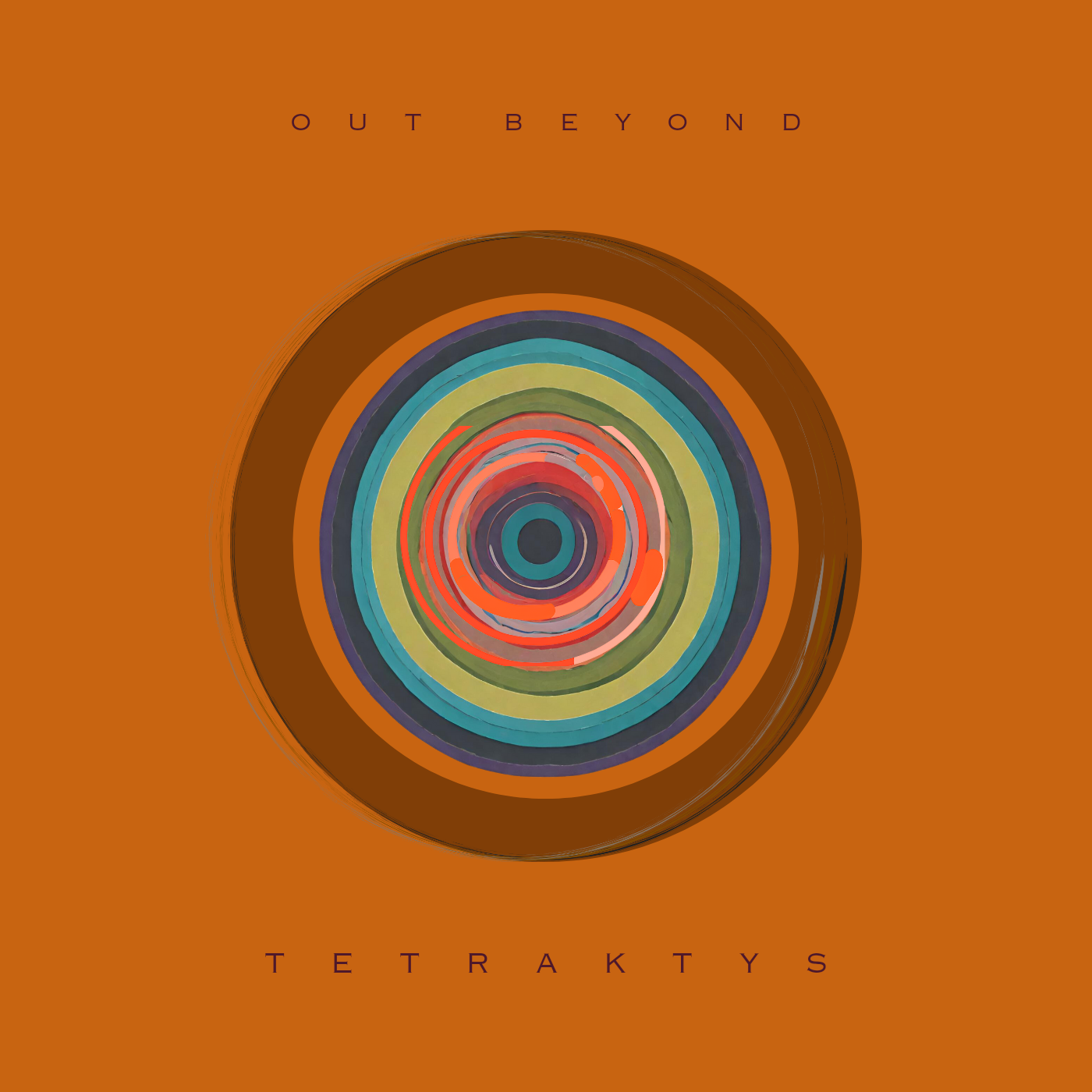
Music By Tetraktys
Tommaso Iacoviello Trumpet
Sarvin Asa Cello
Stefania Scapin Harp
Stefano Battaglia Piano
Recording February 2022
Mixing / Mastering June 2024 Studio Artesuono – Cavalicco (Udine)
Sound Engineer Stefano Amerio
Artistic Production Stefano Battaglia, LPRM (Laboratorio Permanente di Ricerca Musicale)
Executive Production Sarvin Asa / Tommaso Iacoviello / Stefania Scapin
Cover Astra Limen Artwork
Graphics SimulArte
Available on
Out There
Beyond what is right and what is wrong / there is a vast field / We will meet there /
The morning breeze has secrets to tell you / Do not go back to sleep /
The soul is like a clear mirror / the body is the dust that covers it /
We cannot perceive the beauty within us / because we are beneath the dust /
The way you love is the way God will be with you /
Only through the heart can you touch the sky /
Happy the moment when you and I sit in the temple / two figures, two forms, but one single soul, you and I /
At the moment we accept the problems that have been given to us / the doors open /
You are not a drop in the ocean / You are the entire ocean in a drop /
On a day when the wind is perfect / you need only unfurl the sails and the world fills with beauty /
Today is such a day /
If you have a passion for sacred happiness / cast away your arrogance and become a seeker of hearts /
Move, but do not move in the way fear moves you /
The moonlight floods the whole sky from one horizon to the other /
How much it can fill your room depends on your windows /
You were born with ideals and dreams / You were born with greatness / You were born with wings /
You were not created to crawl / so don’t /
You have wings / Learn to use them and fly /
Become the sky /
Take an axe and break the walls of your prison / Escape /
When I am with you / we stay awake all night /
When you are not here, I cannot sleep /
I thank God for these two kinds of sleeplessness and for the difference between them /
Every time we manage to love without expectations, calculations, or negotiations, we are truly in paradise /
Yesterday I was clever, so I wanted to change the world /
Today I am wise, so I am changing myself.
Jalāl-ud-Dīn Rūmī (1207–1273)
Track list
1. OUT BEYOND
2. I AM THE MOON
3. THERE IS A FIELD
4. EVERYWHERE AND NOWHERE
5. THE WHOLE OCEAN IN ONE DROP
6. THE MORNING BREEZE HAS SECRETS TO TELL YOU
7. VAULTS
8. CLAY WIND AND WATER
9. BECOME SKY (YOU WERE BORN WITH WINGS)
Legenda
Tommaso Iacoviello
In my research journey, I have had the privilege of engaging with the thought of Stefano Battaglia, a figure who—through his music and teaching—has articulated a vision of improvisation that resonates deeply with my own. Entering a permanent laboratory where sound becomes a mirror of the soul and creation an act of profound self-discovery, in which our ideas meet and strengthen one another, has been truly formative.
If the only authentic space is the present, then improvisation, which is born “here and now,” reveals itself as the most vital and necessary form of artistic expression. It is an invitation to shake ourselves awake and begin again, an exhortation to recognize music as a transformative, almost revolutionary force for cultural renewal.
In the laboratory with Stefania, Sarvin, and Stefano, the concept of tabula rasa was not merely a theory but a daily practice. Each session was an attempt to approach sound without preconceptions, allowing ideas to emerge spontaneously from interaction. One of the most fascinating results was the generation of a “third sound,” a sonic entity that transcended the sum of the individual voices. This “third sound” was born from the various “creative axes” established between the instruments: the interaction between harp and cello, piano and trumpet, and the crossed combinations gave rise to new and unexpected sonic landscapes. It was beautiful to witness—and contribute to—this sonic genesis.
From this interaction emerged sound worlds that we began to call, almost playfully, “Arpacello” or “Arpiano,” to indicate the timbral fusion and interdependence that arose between the instruments. In our laboratory, the spontaneity of improvisation merged with a formal coherence that seemed almost preordained, yet was in fact the result of deep listening and collective awareness.
My experience in this research laboratory—enriched by the resonance of Rumi’s words and by the collective practice with Stefano, Stefania, and Sarvin—has radically transformed my vision of improvisation. It is not merely a performance, but an ongoing musical inquiry, a powerful tool to awaken, activate, and, hopefully, rediscover the Self. As Battaglia often emphasizes, it is a means to stay awake in the present moment and to develop the being of the Self.
Ultimately, Battaglia’s laboratories have always shown me that improvisation is the purest form of music’s essence: a continuous creation that transcends categorization, animated by an inner unifying force, and serving as a vital and ever-evolving expression of humanity’s deepest truths.
It is a fundamental way of being and creating in the world.
Sarvin Asa
This album was born as a testament to my first research project in free improvisation within a small ensemble. It marks a pivotal moment in my artistic journey, when I began exploring the possibility of expressing myself outside traditional structures, beyond stylistic boundaries and beyond the written score.
The cello sounds captured in this album are my earliest discoveries—traces of an inner and aesthetic journey that continues to evolve to this day.
The quartet involved in this experience was composed of musicians with very different backgrounds—some coming from jazz, others from classical music, like myself. This diversity was both a richness and a challenge: together we built a shared language and strategies of listening and interaction that allowed us to transcend our original genres, finding a meeting point for our individual sensibilities.
One particularly interesting and distinctive aspect of this work—even within the European free-improvisation context—was our collective adoption of a shared “compositional grammar,” inherited from the Permanent Research Laboratories led by Stefano Battaglia at Siena Jazz Academy. Our placement within the sonic space was almost never random, but based on principles of complementarity, often dependent on one another’s actions. This made every musical gesture deeply relational, consciously alternating our focus between “speaking” and “responding,” between individual initiative and collective design.
These were my first steps into the world of improvisation, and for a classical musician they were delicate ones: the focus shifted from performing someone else’s aesthetic to a true tabula rasa of learned notions, in favor of a personal search for aesthetic identity, without any “right” or “wrong.”
In this open space, my identity began to listen, and quite naturally a deep call toward my Iranian heritage emerged: a preference for sparseness, for the cello’s mid-low register, almost evoking the sound of Islamic chants at prayer time. This sonic color resonated strongly with Stefano, who has always cultivated a sense of closeness to the Middle East, and it also found its place in the sensibilities of the other members of the quartet. Alongside more contemporary pieces and diverse aesthetics, forms arose that clearly evoke a Middle Eastern musical imagery.
From this resonance grew a connection with Rumi’s poetry, whose words inspired the track titles and became an extra-musical unifying image, giving coherence and depth to the entire work.
Stefania Scapin
An Italian harpist active on the international music scene, spanning classical and contemporary repertoire as well as experimental music and improvisation.
After completing her academic studies with top honors and several years of advanced training in solo and chamber repertoire at some of Europe’s most prestigious institutions (the Royal Academy of Music in London and the Universität für Musik und darstellende Kunst in Vienna), she continued her artistic work as a soloist, ensemble musician, and orchestral performer, with a particular interest in 20th-century repertoire and the contemporary music landscape. She is also dedicated to teaching, holding positions at several Italian music academies, including the Siena Jazz Academy, where she currently teaches. She has performed at many of Italy’s most prominent music festivals, including the Festival dei Due Mondi, Micat in Vertice, Chigiana International Festival, Nuova Consonanza, Cantiere Internazionale d’Arte di Montepulciano, LacMus, Mittelfest, BAClassica, Musica a Villa Durio, among others. She has been featured in various interviews for RAI radio programs and national newspapers.
Her first recording project, French Songs for Flute and Harp, created in collaboration with Andrea Manco (principal flutist of Teatro alla Scala), debuted in 2020 and was supported and produced by the cultural association Musica con le Ali.
She has won several awards in solo harp competitions and has served as principal harpist with the National Symphony Orchestra of Italian Conservatories, the International Young Soloists’ Orchestra, the Sinfonia Smith Square Orchestra, the Camerata Strumentale di Prato, and the Mitteleuropa Orchestra.
After refining her artistry under internationally renowned musicians such as Fabrice Pierre, Isabelle Perrin, Luisa Prandina, Margherita Bassani, Karen Vaughan, Park Stickney, and Skaila Kanga, she began to explore new musical languages. Her encounter with Stefano Battaglia deepened her study of improvisation, expanding her vision of harp performance practice and enabling her to explore the instrument’s rich expressive possibilities through a continuously creative dialogue between technique and musical aesthetics.
In the field of contemporary and jazz-experimental music, she collaborates with leading artists such as Stefano Battaglia, Harris Lambrakis, Francesco Ponticelli, and with various ensembles including Tabula Rasa Chigiana–Siena Jazz Ensemble, Chigiana Chamber Ensemble, Ensemble degli Intrigati, and Ensemble de Angelis.
She holds a degree in Psychology from the University of Padua and is completing her studies in Music Therapy at the “Girolamo Frescobaldi” Conservatory in Ferrara.
Stefano Battaglia
THE BRIDGE
Rumi’s poetry has long served as a steadfast bridge between the Islamic world and the Western one, bringing all people closer to understanding and Divine compassion. His vision remains contemporary, urgent, and necessary in the divided, violent world of this century. It seeks to unite faiths and nations, speaking the universal language of love—one that crosses cultural boundaries and helps us move away from the politics of hatred and fear, of separation and division.
EVERYWHERE AND NOWHERE
Rumi’s biographer, Aflaki, recounts the words of an Eastern Orthodox priest: “Master Rumi is like bread. Everyone likes him.” And indeed, Rumi’s poetry is truly nourishing and delightful spiritual food, prepared with love. This is why, more than seven centuries later, his poems—now translated into many languages—still rest sweetly and vibrantly on our lips.
I am the Moon, everywhere and nowhere. Do not seek me outside; I dwell within your very life.
Everyone calls you toward themselves; I invite you only within yourself.
Poetry is the boat and its meaning is the sea.
Come aboard, now! Let the moon guide this vessel!
THE VIBRATIONAL TEMPLE
In the 13th century—the same years in which Saint Francis was renewing Christianity—Rumi revitalized Islam by placing love at its center and signaling profound transformation within the Islamic world, becoming over time a point of encounter between East and West.
For this reason, many regard him not only as a poet but also as a prophet.
His principal work, essential to the Islamic world and especially to Turkish-Iranian Sufism, is the Mathnawi, a masterpiece of Persian literature and universal mysticism. It is a 25,000-verse poem divided into six books, translated and studied for centuries around the world—including in Italy thanks to Gabriele Mandel Kahn, to whom the country owes much of its understanding of Islamic art and culture.
Rumi follows the Qur’an but loves all religions and transcends them all, freed from the bondage of dogma and intellectual concepts in favor of feeling—of the direct experience of God’s love within the heart.
Rumi’s path is one of spiritual freedom and, like Jesus, he affirms that the true temple is not in churches but in our heart—a vibrational temple of music and verse, where prayer rises from inner listening and where everything in the universe turns and vibrates as energy of light and sound.
In Sufism, the word Samā means listening. Through the rhythmic spinning of the Samazen dancer, the mind is abandoned and harmony with the universe’s sound and light is achieved. At the end of the sacred dance, the chant Hu is sung, emerging from deep within the dancer.
THE ROOTS OF THE ROOTS OF THE ROOTS
Jalāl-ud-Dīn Rūmī was born in 1207 into a noble family of Sufi mystics near Balkh, an ancient Persian Silk Road city now in Afghanistan. After the Mongol invasion, he wandered in exile until settling in Konya, Turkey, where he founded the Sufi order of the Mevlevi.
His father, Bahâ Valad, was a renowned scholar and Sufi mystic, whose sermons were said to be attended even by the king of Persia.
In 1244 came Rumi’s encounter with the dervish Shams Tabrizi—literally “the sun of Tabriz”—who had devoted his life to the practice of Sufi teachings. Their conversations sparked a profound transformation in Rumi, leading him to devote much of his time to poetry and to develop the practice of samā, where meditation, music, song, and dance merge into a single process.
Though he earned his livelihood from the religious school, he was also an extraordinarily prolific and passionate poet, creating two masterpieces of Persian literature: Diwān Shams Tabrizi, in honor of his spiritual master, composed of 44,000 verses, and the Mathnawi, “rhyming couplets on spiritual themes,” comprising about 26,000 verses.
While the Diwān is filled with emotional and fiery poems, the Mathnawi is a didactic book that teaches the wisdom of love—or, in Rumi’s own opening words, “the roots of the roots of the roots of all religions.” Unlike poets who repeatedly revise their work, Rumi wrote extemporaneously, reciting his verses to his disciples in states of ecstasy and contemplation, while listening to music, dancing, or in the midst of conversation. His poems overflow with spontaneous images expressed in a vivid and imaginative poetic language—the mark not only of a gifted poet but of a mystical master.
MUSIC AS DIVINE REFLECTION
Sufis use a parable to explain the sense of divine reflection:
God’s love and presence are like the sun—too powerful to gaze upon directly, yet we can enjoy its reflection on the surface of a lake.
In the realm of the Unseen, a sandalwood burns. This love is the smoke of that incense.
One of the greatest obstacles to accepting divine presence is the refusal of what cannot be seen or touched. Every musician experiences this multilayered perception: through music, one may become aware of one’s divine nature and activate it through creation; one may live music as offering and prayer, drinking the wine of love; and finally, one may turn attention inward, toward the deepest senses that invite us to feel God—or sense the divine as one senses incense.
In Sufi, Christian, Buddhist, and Hindu traditions alike, incense evokes the presence of the sacred. Music can be compared to incense: invisible, intangible, pure love through which matter becomes embodied. Resins and embers transform into smoke, spreading fragrance—the symbol of divine presence.
Water for the fish, air for animals—we might say. Rumi saw this essence, love, as the matrix of the cosmos.
In modern scientific terms, the best explanation physicists offer for gravity is not a simple attraction between isolated bodies, but a force inherent in the very fabric of the universe. The world is not still, and we are mortal; therefore, the failure to perceive the divine is, in itself, a kind of sacrilege.
Music is one of the paths to reach God, and the Persian poet maintained a profound connection to music through the ney, the reed flute considered a manifestation of the universe’s essence, a symbol of divine love, a bridge between earthly and spiritual realms.
According to the Sufis, a sonic current of life permeates the entire universe, creating a correspondence between macrocosm and microcosm; from its balance arises a universal sound and dance. The great 14th-century Persian poet Hafez hears it and writes: “I do not know how far the destination may be, but from afar a music reaches my ears.”
MUSIC AND TRANSCENDENCE
The Mathnawi opens with a long introduction centered on the ney, whose breath conveys the divine and whose voice reveals the importance of music in Rumi’s lyric world. One of the oldest instruments known, the ney expresses—through its mournful intensity—the soul’s longing to return to God and be reunited.
In Hindu philosophy, it is the flute of God, the Hu-sound of Krishna’s flute that permeates the universe: by following that sound, the soul finds its way home.
States of consciousness manifest as vibration, music, and sound. Poetry is pure consciousness precisely because it expresses rhythm and musicality. In Iranian and Turkish cultures, song, music, and poetry have always been profoundly intertwined.
What cannot be expressed in words can be expressed in music. Since ancient times, musical harmony has carried the divine word from invisible worlds down to earth.
The Mathnawi’s proem wonderfully expresses the state of separation of the soul—imprisoned in human corporeality—and its long journey toward awakening: awakening to the essence of the All, pure Vibration. In many poems Rumi describes states of mind and spirit that Sufi masters believe love brings forth: the extinction of the ego, surrender, annihilation—akin in many ways to Buddhist nirvana—complete intoxication with divine love: ecstasy.
The enduring relevance of Sufi practice lies in its pursuit of experiencing essence through the unity of the three centers—body, mind, and spirit—using music and dance as instruments of transcendence in order to reach ecstasy.
LOVE
Through poetry, Rumi carves out his message of peace:
Go and wash all hatred from your heart seven times with water.
Only then may you be our companion and drink the wine of love.
In the West, we have long believed that peace and progress are gifts granted by some invisible benevolent hand. Betrayed by intellectuals and politicians, we live lulled by the dream that we will always live longer, healthier, wealthier. The wars of recent years call us back—brutally—to awakening. We must not surrender to this sleep. In our comfort-induced inertia, we have forgotten that the construction of anything meaningful requires effort, sacrifice, and sometimes even the extreme. It has always been so for every generation before us.
Love is the alchemy of peace.
Shortly after World War II, Albert Einstein observed: “The war is won, but the peace is not.”
Seven hundred years earlier, Rumi had the same insight: violence cannot generate lasting peace; only understanding, compassion, kindness, and sharing can—these are the qualities of love.
Aflaki recounts that a Christian monk, having heard of Rumi’s great spiritual and cultural refinement, went to visit him in Konya. To show respect, the monk prostrated himself before Rumi, and when he lifted his head, he saw that Rumi had bowed down before him in return.
Rumi expanded the domain of love from personal relationships to religious coexistence and international peace. Love has always existed—older and more deeply rooted than any religious institution—and all religions and spiritual traditions are founded upon this shared aim: love.