
CENTRIPETA
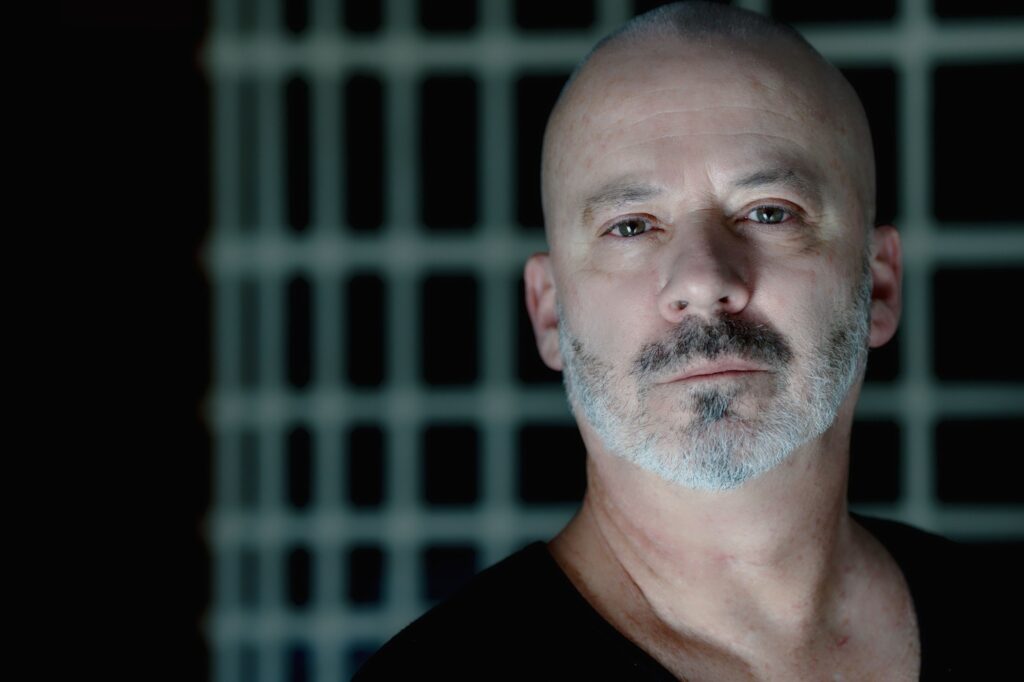
WO VIEL LICHT IST, IST STARKEN SHATTEN
Dove c’è molta luce l’ombra è più nera
Johann Wolfgang Goethe
Quando más alto subía,
Deslumbróseme la vista,
Y la más fuerte conquista
En oscuro se bacia;
Mas por ser de amor el lance
Di un cielo y oscuro salto,
Y fui tan alto, tan alto,
Que le di a la caza alcance
Juan de la Cruz (Coplas a lo divino)
Più salivo in alto più
Il mio sguardo s’offuscava,
E la più aspra conquista
Fu un’opra di buio;
Ma nella furia amorosa
Ciecamente m’avventai
Così in alto, così in alto
Che raggiunsi la preda
Juan de la Cruz (Coplas a lo divino)
trad. Giorgio Agamben
SHADOW AND LIGHT, SILENCE AND SOUND
These verses by Juan de la Cruz (1342–1391) represent a manifesto of the experiential knowledge of God, of the crossing of mystery—of a knowledge that is not possession but dispossession, not radiance but longing and struggle. A light that ignites only when one inhabits darkness and immerses oneself in the unknown. Where there is much light, the shadow is darker, Goethe wrote in 1810. The opposite is also true, for it is from darkness that light becomes dazzling; it is from blindness that light offers revelation.
In the same way, only by dwelling in the deepest silence does one long for sound. Only by building a temple of silence around sound can the desire for music return. And music teaches and invites us to inhabit disturbance as a vibrant, generative place from which we need not defend ourselves.
CENTRIPETA
It is a musical platform without distinctions of genre, race, or religion.
Music is its center—its core. A music that has no name, that does not yet exist.
The exploration around it and for it forms the many varied and different concentric circles that are drawn to it.
Symbolically, it arrives at the thirtieth year of life of my Permanent Laboratory of Musical Research, founded in 1996.
POETRY
I wanted to introduce the manifesto of this record platform with poetry because Centripeta will be a poetic place. I need poetry; I search for it everywhere. Nature is poetic. The world is poetic. And the world is in great need of poetry—of poetic beings, poetic poets, poetic musicians and dancers, poetic architects and directors, poetic painters and photographers!
The most beautiful book on music ever conceived—and it is significant that it was conceived by a poet and not by a musician—is the cycle of sonnets that Rainer Maria Rilke dedicated to Orpheus, in that February of 1922 during which the poet experienced a kind of creative fever and, in just one month, wrote not only the Duino Elegies but also, in a single outpouring, the Sonnets to Orpheus.
It had an explosive impact on me; I consider it an initiatory reading, the one that most deeply influenced my musical life.
Poetry is everything that interests me in life; it perceives beauty and builds a temple around it. In music, my preferences have always been—and will always be—directed toward poets. Regardless of the era they lived in, or the style and musical genre through which they expressed their individual universe. This has greatly influenced my listening, my studies, and my taste, which is not a taste for genre but solely for the quality of expression. And that expression must be poetic.
HARVEST
Centripeta will be a harvest. Rilke wrote in his sonnets: “However much the farmer worries when the seed turns into fruit, it matters little: it is the earth that gives.” Nothing is truer or more profound for a musician: music is the gift. Living in it and for it is the act of giving back. One cannot ask of life more than what one already knows it cannot give.
Rather, one begins to understand that life is a time of sowing, and the harvest has always been there—it never truly arrives because the sowing continues endlessly. And when the harvest gives something back, one is already so absorbed in the new sowing that the harvest goes unnoticed. Until one understands that perhaps the gift is the sowing itself; the harvest may be destined for others—if they know how, and wish, to gather it.
BEAUTY
Nothing can divert me from sowing; nothing can prevent me from seeking beauty. Because when you find beauty, you find inspiration. And beauty is everywhere.
It is the old story of the journey and the destination: beauty is in the path, beauty is the path. Never stop!
When you know you are doing what you are meant to do, you must try—every single day.
MOMENTUM
Momentum! Impulse—the surge of motion. Anyone with experience in musical improvisation instinctively understands something that otherwise should not be explained in order to be understood.
Momentum is the meaning of this new platform. Like that of an animal. A wolf or a bird. A reaction. A stance. A perspective. It opens me to an individual yet communal project. Surrounded by many.
It is my own gaze upon the music that concerns me, in many different aspects. An open window—open onto a different world accustomed to viewing things from another perspective. Never disconnected from momentum.
It is a reflection that allows me to live my relationship with the world in which I live—and create—more fully. An upward impulse that, after so many flights through music, prepares me to shape in time another kind of ascent, a rising, a letting go.
One that lifts me lightly, leaving many things on the ground: traces, signs, the sounds of the tribe with whom I have spent Time in Music, to whom I am devoted.
THE CIRCLE
The Circle is the symbol of symbols. It is the symbol of the Creative Principle from which everything originates and to which everything returns. It is closely tied to the center, the heart, the core. It expresses the relationship with the primordial unity—transparent, uniform, and undifferentiated. The sacred place where all material and spiritual energies are concentrated.
It is the central point of the cross from which the rays extend and to which they converge. The circumference with its central point is the Sun, whose warmth is associated with love, and whose light is associated with beauty and truth.
The Circle, devoid of corners and edges, symbolizes harmony, which—through the absence of opposition and difference—translates into an equality of principles.
It is the symbol of the spirit and of the etheric body, and shapes the intellectual and spiritual dimension. As a spherical magical gesture, the Circle is a well-defined temple, even though it is not a physical space. In esotericism, it has served as an impassable magical boundary since ancient Babylon; and ceremonial magicians of the Middle Ages and the Renaissance also used circles in their rituals to protect themselves from the forces they summoned.
For nomadic peoples, the sanctuary of the divinity was conceived as circular, like their tents and their camps. To mark the boundary, they fixed a staff in the center as the axis of the world, and with a cord traced the Circle—a symbol of unity and cosmic transfiguration.
And I must not forget the symbol of the circus, which for children represents transgression, difference, escape from reality, and the first encounter with the magical.
CYCLES
In its dual nature, the circle also embodies the sky in relation to the earth—to everything material—and as sky it is connected to the perpetual cycle of life, expressed by the circumference, a geometric figure with no beginning or end, symbol of eternity and perfection.
The circumference also marks a boundary between the defined inner space and the infinite outer one, giving rise to a communal and tribal dimension gathered around a shared identity.
CIRCULAR MOVEMENT
Circular movement—also the movement of the heavens—is perfect and unchanging, without beginning or end, without variation. It represents Time, a continuous and unvarying succession of identical instants.
Every recorded document represents both a cycle and an instant, and for the musician: vision and genesis, search and rediscovery, struggle and fulfillment.
Even the physical object that documents this cycle has been circular for over a century—and for this reason, we must continue to produce records!
RECORD
Today, with yet another and ever-faster transformation of formats, our relationship with the record has radically changed, and the market no longer exists as we once knew it.
With the twilight of LPs and CDs, the record will remain for centuries the object launched by the discus thrower since the first Olympic Games in Athens, and the medium onto which the memory of twentieth-century civilization has been engraved through music.
We are still in a transition toward the disappearance of the physical object, yet the community—now orphaned of a reference place—continues to exist and generate precious energies amid obstacles of all kinds, including disorientation and indifference.
This attitude is neither new nor exclusive to the musical community; it is deeply rooted across expressive and scientific fields. A place of recognition and hospitality is therefore necessary.
(CON)CENTRATION
A home in which the word concentration is truly a value—across multiple dimensions and levels.
First, concentration on the musical object. Much of the musical community is self-centered and uses music as a tool of self-revelation.
I believe instead that one must strengthen the self to offer stronger music, and that music alone must be the objective.
The absence of ego often produces a substance far more nourishing for the musical object.
Thus, con-centration: being centered on music, for music.
Concentration as focus on an aspect of experience; as convergence of substance toward a point; as ratio of substance to totality.
For Centripeta, this will mean focusing its activity on the Permanent Laboratory of Musical Research.
UNITAS MULTIPLEX
In 2005 I used the concept of “multiple unity” in the booklet of the ECM album *Re: Pasolini* to describe the complexity of Pier Paolo Pasolini’s figure (poet, filmmaker, essayist, intellectual, etc.). The concept, when applied to a multi‑idiomatic musical thought, kept its meaning and manifested itself without ever fully materializing in the never-born UM (Unitas Multiplex), which had gathered dozens of musicians from different expressive areas. The idea was born on the 10th anniversary of the Permanent Laboratory of Musical Research, which I still coordinate today and which has now reached its 30th year.
In 2007 the idea arose to create a record platform that could give voice to a specific creative area of the musical landscape—an area that can be summarized as “the art of musical improvisation.” It does not define boundaries of idiomatic or ideological nature. Over time, a truly trans-idiomatic and trans-generational musical community took shape, full of talent, knowledge, awareness, and expressive urgency. That community needed a fulcrum—a Center. Centripeta is today what UM wished to be in 2007.
ETHOS PATHOS LOGOS
In the ideal and virtuous triangle that represents the musical object (the *what*), composed of ethos (why you do it), pathos (how you do it), and logos (through which form/language you do it), the first two should be prioritized today. This is because the excess of sophisticated logos, potentially in theoretical dialogue, risks distancing us from the meta-linguistic meaning due to the complexity of comprehension. Improvisation is a naturally transversal and unifying tool of the logos, through the incredible variety of influences, contaminations, and techniques circulating today and thus potentially assimilable through fierce desire, unshakable passion, and immense work.
THE NAME OF MUSIC
This universal element—the lack of a single name to assign to the music, the absence of one certain logos in favor of a non-logos or multiple layered ones—has always made this area mysterious. Around this absence of barriers and limits lies its sense of belonging. Consequently, it becomes difficult to find a protected space, without being inevitably placed in categories that do not always reflect one’s identity.
Market logic asks: “What kind of music do you play? Tell us your style. On which shelf do I place you?”
Now that even shelves no longer exist, the question persists. What seems a harmless inquiry hides the impossibility of describing the indescribable—labyrinths and mysteries only music itself can reveal.
REAL TIME
Music has the gift of linking humanity in a universal zone of perceptual consciousness. Bonds formed through music can be more intimate and profound than others. To build and protect its social role, music must continuously leave traces of its time—adding fragments of the present to its flowing history.
For the musician, the present is the only true time that exists in the zone of active, propulsive attention. The past lives only if we keep it alive within us as a silent immortal teacher, and the future does not yet exist—though we project toward it the quality of our present gesture.
CONTEMPORARY MUSIC
Centripeta’s philosophy is undoubtedly that of a platform for contemporary music in a universal sense. Many traditions remain avant‑garde precisely because they were the contemporary music of their time. This makes their message timeless. Music is testimony both of the individual microcosm and the civilizational macrocosm in which that individual lives. My musical path has always been an attempt to rediscover the archaic and timeless values of music through contemporary expression.
Traditions fascinate me; some I have studied passionately. I do not seek to be modern or avant‑garde. Many things I play are traditional. Often, what has already been played can be the most surprising, depending on its nature and on the authenticity of the moment in which I need to play it.
THE NAME OF THE BRAND
Naming things is always difficult: a name seems to kill an idea or, worse, replace it. Desire is necessity. Music should inherently contain and transmit only the desire for music—the necessity and desire of those who make it and those who listen to it.
Today desire has been transferred into the name, into the sign of desire—into the automaton that moves by itself. This strikes language itself. Ancient words were pedagogical; today, in a society based on commodification, the word becomes merchandise. The goal is not to criticize desire but to understand its transformation.
DESIRE
The sign of desire has changed, but desire itself—its anthropological root—has not. Desire is projection, the opposite of possession, the revealer of illusion. Desire is our name. Naming someone’s desire on their behalf is a sacrilege. Giving a name to an expressive urgency creates a short circuit. What matters is the presence and truth of those desires, constantly transforming, without the pathological preoccupation with success, recognition, or approval. Today we know: even happiness lies in desire—not in its fulfillment.
V. V. (VOLUNTAS VERITAS)
“I want to play…” has over time replaced the more truthful “I play like this, therefore I belong to…” Desire has become an act of will, driven by an identity external to the self. But music and art transcend the names and labels we impose upon them. Volition without correspondence in sound dissolves like dust.
The point lies behind: desire—instinctive, urgent, beyond thought. My choice of improvisation is driven solely by following desire in the here and now. For perfect adherence I must feel the simultaneous participation of body, mind, and spirit. I call this total presence *voluntas*—a will akin to vocation, osmotic sum of body, mind, and spirit, closer to surrender than control.
BEYOND
This is the difference between substance and its garment, between actor and mask, essence and personality. The goal is not to represent a category or a named desire but to detach from empty words. Music cannot be reduced to grammar or syntax. It is a meta‑language—beyond logos.
MISTERY
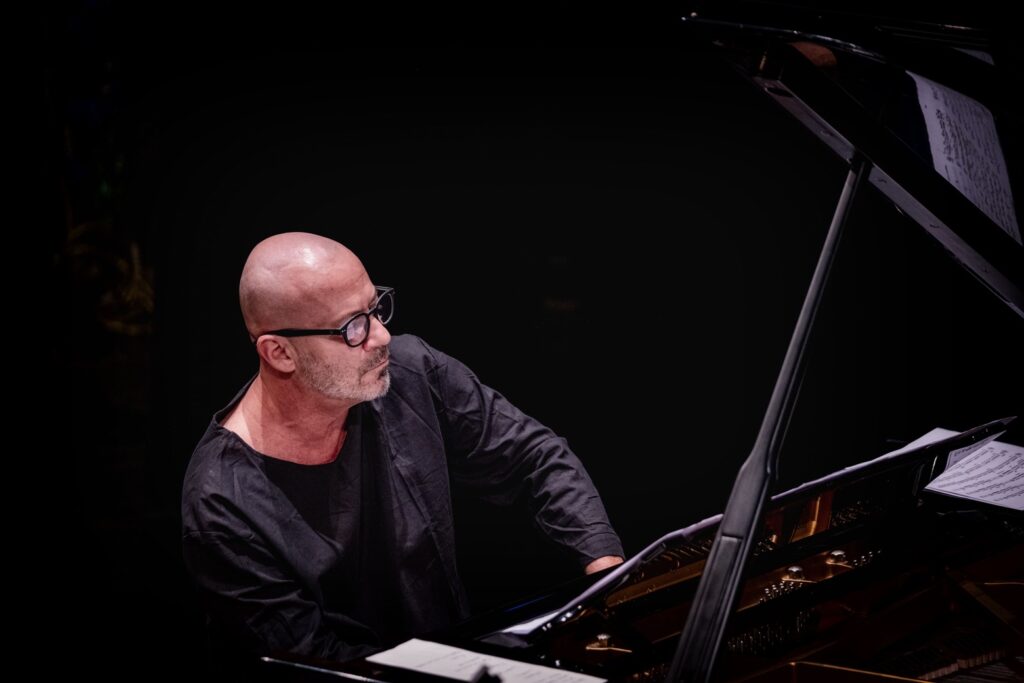
In that “beyond” lies the mystery of music, connected to the unique, indivisible individual—maker and listener—and to the present that individual inhabits. By embracing this mystery, communication becomes possible among beings from distant cultures and times. I do not want the mystery explained; I want to live in it. Centripeta dreams of giving voice to music born from desire and voluntas—not from naming or planning.
UTOPIA
This is the utopia of a universal language—Total Music, an Esperanto. Music without name needs someone to generate it continuously. The musician is not awake when part of them relies on the automaton, which cannot live in the present and merely replicates. Representation, never manifestation. Again emerges the need for total presence.
REPRODUCTION
Twentieth‑century music was born with the revolutionary possibility of reproducing a performative gesture. As an improviser, the ability to fix real‑time compositions into recorded documents was a privilege. Improvisation’s irrepeatability breaks with mechanical reproduction—a fascinating responsibility. For the first time, the performer becomes composer through the eternalizing power of recording. The explosive impact of jazz owes much to this technology: the truth of a performer’s “here and now” became writing.
This revelation shaped my identity—not through names or styles but through the centrality of improvisation as foundation and common denominator.
AUTHENTICITY
Reproduction contains a dark side: imitation. After decades of globalization, replication has multiplied. Sometimes what is reproduced sells more easily than what is original but unknown. Much of the community chooses to inhabit the market parasitically—replicating what already exists, solving artistic tensions at their root.
But this is craft, not exploration. Replication satisfies collective desire to hear the same thing repeatedly. Worse, it may serve branding strategies. Yet even imitation may fail: you cannot reinvent Coca‑Cola; you can only copy it under another name. Artistically, imitation is a missed—and sometimes blasphemous—opportunity, especially for real talent.
CORE
The final step in the virtuous chain between research and production is autonomy in documenting research itself. A *documenta sonoris* in which one can recognize oneself. An amplifier for the voice of a community—possibly several communities—creating identity through its publications. This is the meaning of the centripetal name: gathering diverse forces toward an essential nucleus—the generative heart of music, stripped of idioms and styles.
FULCRUM
This is also the meaning of its image: the concentric choice for each cover. Serializing multiple circles toward the center becomes its manifesto. Complexity and diversity of languages are represented by concentric forms drawn toward the fulcrum—different colors, same attraction.
essenCE
Individually, the goal is to distinguish personality from essence. Personalities shift with passions, studies, encounters, readings, context, teachers, family. The core, however, is indivisible, innate, and permanent—essential music.
SPACE
Space is needed. If it does not exist, we create it. A dynamic, autonomous place that documents complexity as propulsive lifeblood. Creativity, freedom, and independence guide dreams and reveal true nature through action—producing, creating.
CREATIVITY
Creativity reminds us of our divine side—a potential that needs expression to reveal itself. The awareness that we can create something that did not exist before is privilege and responsibility. Without this awareness, musicians conform to trends—flattening the entire scene. Centripeta’s foundation lies in cultural independence and the three archetypes of creative force.
INNOCENCE
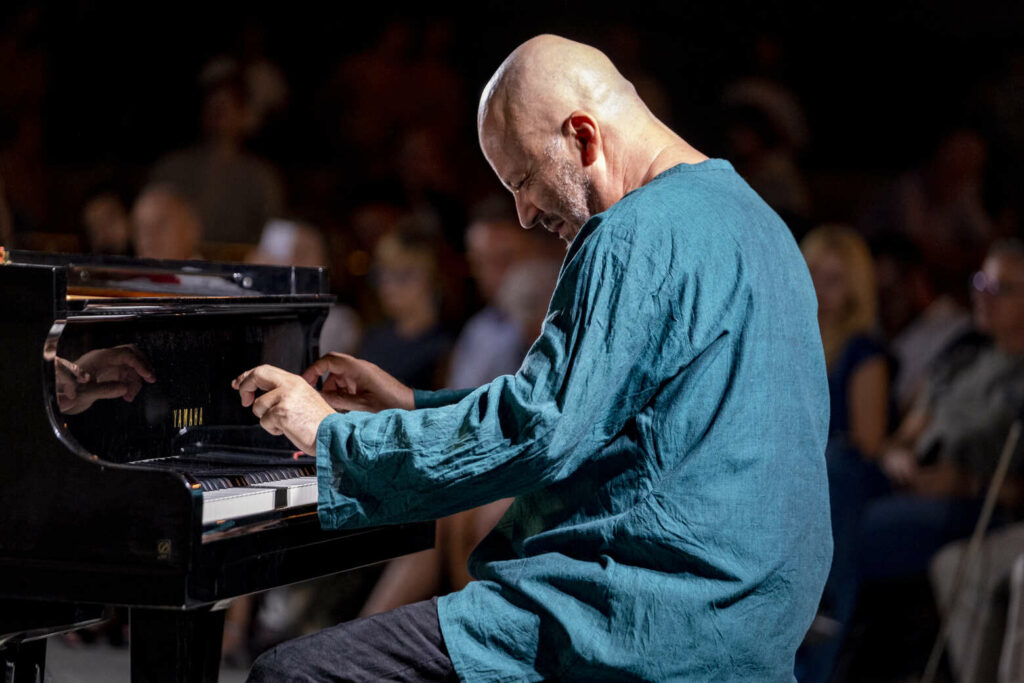
The first archetype is the Innocent—purity, honest naïveté, the innate. Innocence protects the musician from extra‑musical distractions, focusing solely on truth and beauty. Improvisation is the cradle of innocence and serious play. Its challenge is to preserve the enchantment of wonder—the ever-new mystery of sound itself.
CONSCIOUS INSTINCT
The second archetype is the Sage: knowledge, awareness, experience. Skill is conscious memory—faith, determination, study, work—which generates trust and credibility. Improvisation channels what I call conscious instinct.
EXPLORATION
The third archetype is the Explorer—freedom through adventure, search, experimentation even without models. Improvisation is the place of research and discovery, mystery and revelation, darkness and light.
FREEDOM
Freedom and independence in music can mean many things. Free from trends? Yes. Free from the market and consensus? Let’s discuss. Music is the trace of civilization—its resilience—and must survive beyond people and bodies. The present is not reliable as proof of artistic depth.
Our mission is to reveal beauty—even when buried. Only Time filters. The artist must not think of immortality, but do the work.
INDEPENDENCE
Cultural independence is intrinsic to freedom. But independence must not become marginalization. Art should be supported—by institutions, sponsors, communities—without compromising freedom. Artists should not be forced to become their own promoters, agents, producers, influencers. Tabula Rasa Ensemble exists thanks to such virtuous synergy. Not independent—yet free.
RESPONSIBILITY
Free individuals for free music. Every minute the artist subtracts from creation—composing, studying—is energy lost, absorbed by distractions that weaken artistic responsibility and, in scale, collective expression. Society tends toward technology over art, reducing art to free entertainment. Independence involves complex synergy between creativity and resources. Collaboration is virtuous when it does not weaken cultural freedom. Tabula Rasa Ensemble exists thanks to such synergy.
DEVOTION
Our responsibility is to serve music—to give form to unconditional love. The subject is music, not the self. The self must be free to allow works to be free. When conceiving a document of oneself, one must recognize how much true, spontaneous individuality survives market expectations. Musicians must work for music, not the opposite. The farmer need not worry: it is the earth that gives.
OPPORTUNITY
The motto is autonomy—defending liberty and independence. In absence of external support, productive independence becomes the most appropriate path, especially in an era where the market has imploded into digital fragmentation and gratuitous consumption. Opportunity means building virtuous compromises—lowering costs without sacrificing listening quality. Educating to listen becomes our responsibility. High fidelity must not be replaced by the degraded perception of digital devices.
DOCUMENTA SONORIS
Today the musician is the producer. Autonomy brings disorientation and financial responsibility, but also liberation: production becomes free from competition and from the pressure to explain the inexplicable. I imagine a production that is purely artistic and documentary—true expression of the individual or collective self—unburdened by marketing, downloads, likes. A production free from the “easy/difficult music” dichotomy.
OBJECTIVES
The objectives are simple: through free documentation, define a counter‑market dedicated to musical research—one that does not follow market rules. Document a life like a universal archive, without genre boundaries.
NEW MUSIC
The ambition is to gather diverse musical experiences under one roof and illuminate their creative lives through improvisation and new composition. Unite multiple traditions with a contemporary outlook, combining roots and avant‑garde to generate future paths. Improvisation may become the universal territory—a meeting ground for all musical tribes, a shared code born of constant experimentation.
BELONGING
Those who grew up in the post‑modern generation faced globalization of artistic languages. Advantages: creative dialogue, reciprocal influence. Risks: cultural imperialism and homogenization. Jazz-derived musics offered me a way to combine passions from different cultures. That is why I accept the word “jazz.” Today all ideological barriers must fall in favor of any expressive form capable of truth, beauty, and quality.
METAMORPHOSIS
Music is one and deserves more than the boundaries drawn around it. Profound cultural changes must not be forced; they must be accepted. Our responsibility is to improve the world through meaningful music. We must consciously guide transformations without letting them flatten the content that best represents our living traditions.
IDENTITY
Considering the world a single space risks erasing differences—those rooted in millennia of cultural inheritance. Protecting cultural specificity is not nationalism; it is necessity. Globalization is a disaster for the subtle richness of expression. It annuls rather than multiplies.
MOLTITUDE
Monoculture risks a garden with a few parasitic flowers devouring the others. Nature teaches us otherwise. Cultural transformations occur over centuries. I dream of infinite wild flowers—strong, splendid, diverse. Music is philosophically one, but musics (traditions, lineages, identities) must be infinite. The nightmare of hearing the same music everywhere is near—especially in the age of artificial intelligence.
NOW
Contemporary music is the only music that truly has reason to exist—because the past no longer exists and the future has not yet arrived. All music must be existentially linked to the now.
PRESENT TIME
Languages rooted in improvisation must relate to contemporaneity. Otherwise, by relying only on the past or withdrawing into self‑referential communities disconnected from reality, they risk leaving the field of contemporaneity entirely to popular music and entertainment.
ATEMPORE
Contemporaneity demands new music—daily if possible. A universal sense that transcends dividing languages. A de‑structured, atemporal approach—primitive and futuristic together.
TABULA RASA
Aristotele imagined consciousness as an empty tablet. Ancient philosophers wrote each day and erased each evening, restarting learning anew. Musically, tabula rasa preserves creative freshness, authenticity, and the refusal of imitation—resetting daily to rediscover conscious instinct.
RADICALITÀ
Centripeta may be a manifesto of radical change. Despite decades of theorizing “total music,” we still struggle to abandon categories. Centripeta will counter musical homogenization in ensembles, forms, macrostructures, dramaturgy. Today attention spans shrink; music often submits to Chronos (quantity) instead of Kairos (quality). With Centripeta, I fight this decline. Tabula Rasa Ensemble concerts exceed three hours; some works surpass two hundred minutes.
together
The Ensemble tradition—modular, collective—fascinates me. Its music must be unified, not a juxtaposition of classical and jazz or aesthetic categories. We need responsible, expressive musicians.
LABORATORY
The Ensemble practice will center on improvisation, aiming to dissolve boundaries between technique and composition. Morphological scores will guide performance, blending notation and improvisation while preserving structure and dramaturgy.
REFLECTION
Important will be the development of the relationship between improvisation and semantic writing—reflecting on meaning and the link between symbols and what they signify.
meaning
Music’s meaning is to connect souls—musicians and listeners, across cultures and eras. To recreate individual identity and new collective character centered on musical offering rather than stylistic representation.
2025 PRODUCTIONS
In 2025, the Centripeta catalogue is inaugurated with the second Chigiana production of the Tabula Rasa Ensemble, which in that edition is composed of 13 members: Kum!
This consists of three albums (Kum!, Qawm, and Goum), collected in a single triple CD box set.
The spring continues with two solo albums: Vox Humana, the result of the extraordinary vocal research carried out by Elsa Martin—with whom a long-standing partnership has existed since 2016, particularly focused on Friulian poetry (Pasolini, Cappello, Cantarutti, Tavan, and others), a collaboration that has so far produced three albums (Sfueai, Al centro delle cose, Lyra).
The other solo album is a piano solo of mine from 2010, recorded live by Stefano Amerio in Siena, at the Medici Fortress.
It is a work inspired by the poetic cycle The Ascent of Mount Carmel by the mystic Juan de la Cruz.
I divided the recording into two albums: the first, Musica Salva, will be released in spring, while the second, Oscura, will be released in 2026.
Summer will bring the very first Chigiana production with the Tabula Rasa Ensemble: the double album Blossom(2019).
The Ensemble, in its first edition, consisted of 12 members:
4 voices (my daughter Camilla, Elsa Martin, Sicilian singer Adele Russotto, and Piedmontese singer Andrea Silvia Giordano),
clarinet (Tuscan musician Leonardo Agnelli),
trumpet (Tuscan musician Tommaso Iacoviello),
two electric guitars (Lazio-born Nicolò Faraglia and Tuscan Eugenio Stella),
harmonium (Lombard musician Angelo Petraglia),
vibraphone and marimba (played by Basilicata-born Nazareno Caputo),
and percussion (Nicholas Remondino).
We then continue with Out Beyond, a work dedicated to the poetry of the Afghan mystic Rumi with the quartet Tetraktys, which—in addition to me on piano—features Tommaso Iacoviello on trumpet, Sarvin Asa on cello, and Stefania Scapin on harp.
Next will come Nebula, a work centered on devotional composition, featuring me as both composer and pianist, joined by Milanese double bassist Stefano Zambon and Campanian drummer Giovanni Nardiello.
In autumn, one of the most complex Chigiana productions with the Tabula Rasa Ensemble will follow: ∏ÅT∑RYÆ, consisting of seven albums in total.
Three of them will be released in the eponymous triple box set, while the remaining four will be released in 2026 within the quadruple box Synolon.
∏ÅT∑RYÆ includes Atómia, Kora, and States of Aggregation, recorded by an Ensemble of 15 members:
Elsa Martin, Stefano Agostini, Christian Thoma, Ludovico Franco (trumpet), Cosimo Fiaschi, Tobia Bondesan, Francesco Panconesi (tenor sax),
Maria Vicentini on violin and viola,
Sarvin Asa on cello,
Michele Bondesan on double bass,
Stefania Scapin on harp,
and three percussionists: Nicholas Remondino, Pierluigi Foschi, and Giuseppe Sardina.